

If you see a mouse running across the kitchen or hear scratching at night, the first question is: what does it mean to have a mouse in the house? Is it one mouse that wandered in and will leave on its own, or are others hiding? Mice only move into a home for a reason: food, warmth, or a safe place to nest. And their presence always means there is an open entry point you need to find.
In this article we explain what a mouse in the house indicates, whether one mouse means there are more, and what to do as soon as you see it.
What does it mean to have a mouse in the house?
- There is a way in: a gap around pipes, under the door, AC openings or a crack in the wall. A mouse can get through a hole the size of a pen.
- There is food available: bags of rice, flour or bread, pet food, or uncovered rubbish.
- There is a warm, quiet place: behind the fridge, inside a false ceiling, the storeroom, or under the stairs.
- There is a source outside: empty land, rubbish containers, or a nearby farm.
Does one mouse mean there are more?
- Usually yes: mice breed fast, and one female can have more than 5 litters a year.
- If you saw it in daylight: that is a sign the numbers are high, because mice move more at night.
- Mice do not leave on their own: if they find food and shelter, they settle and the infestation grows.
Signs that confirm mice
- Small black droppings shaped like a grain of rice, especially behind appliances and in the storeroom.
- Gnaw marks on bags, boxes and cables.
- Scratching sounds at night from the ceiling or wall.
- A strong urine smell in closed spaces.
- Dark greasy marks on the wall along their route.
Do mice mean the house is dirty?
- Not necessarily: mice get into the cleanest homes if they find a way in, especially in winter when they look for warmth.
- But exposed food lets them settle and breed.
What to do as soon as you see a mouse
- Do not wait for it to leave: the longer you wait, the more there will be.
- Look for the entry point: check around pipes, under doors and at AC openings.
- Store food in sealed containers and remove pet food at night.
- Place glue traps along its route next to the wall, because mice run close to walls.
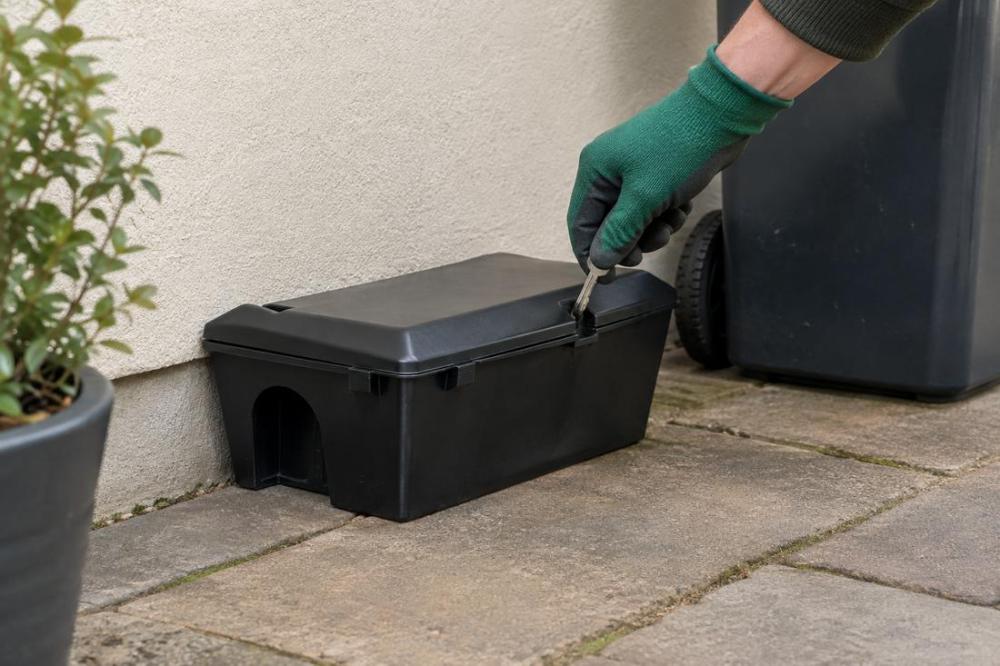
- Outside, in the yard and the bin room: use locked bait stations with bait blocks.
- Seal the entry points once activity drops, using wire mesh or a hard material.
How to use the bait
- Talon wax blocks: each block weighs 10 g; place them inside a locked bait station where you see droppings and along runs, with 5 metres between stations.
- Check the stations daily: replace partly eaten blocks, and if they are fully eaten double the number of blocks.
- Wear gloves when placing bait, because mice smell your hands and stay away.
- Do not leave bait exposed inside the house if there are children or cats, and always keep it inside the locked station.
Products from Orkida
- Catch Master American Glue Trap, 72 boards: glue boards for the kitchen, storeroom and above false ceilings.
- ProCatch Bait Station for Mice and Rats: a locked, safe station for the yard and bin room.
- Talon Wax Blocks, 2.5 kg: brodifacoum bait that resists moisture, used inside stations.
Frequently Asked Questions
What does it mean to have a mouse in the house?
It means there is an open entry point, food is available and there is a warm place to nest, and usually more than one mouse.
Will a mouse leave the house on its own?
Rarely. If it finds food and shelter it settles and breeds, so start control straight away.
Why do mice increase in winter?
Because they look for warmth and food, and get into homes through any small gap.
Should I put rat poison inside the house?
Indoors, glue traps are better, and bait should go inside locked stations in the yard and bin room, away from children and pets.