
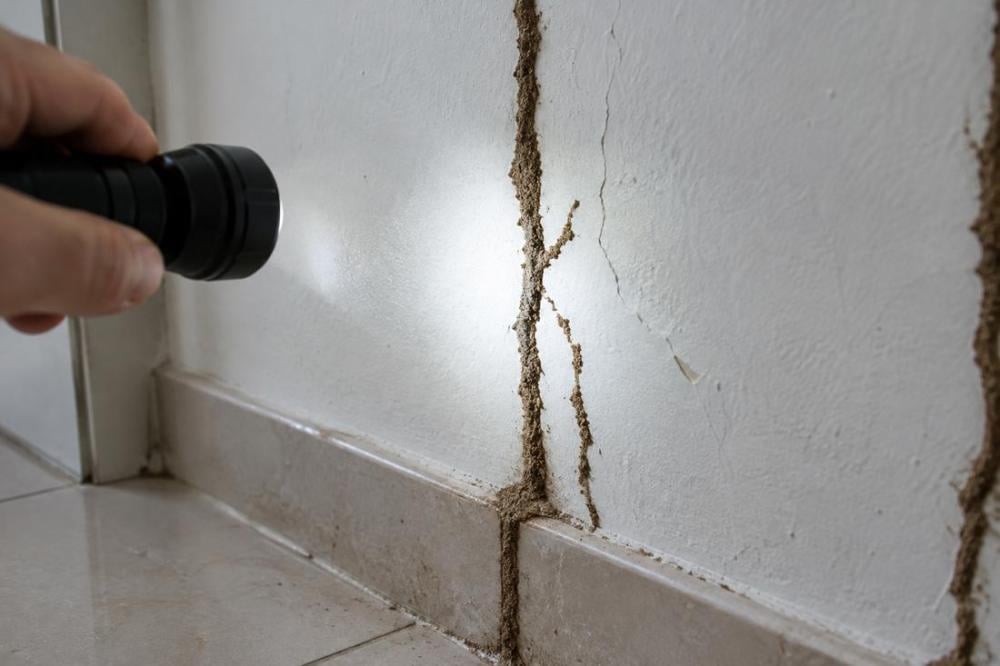

When someone notices thin mud lines on a wall or small wings dropped by the window, they start asking: what does it mean to have termites in the house? Some people hear that termites are a sign of the evil eye, or that they point to buried gold underground. The truth is that termites point to one important thing: moisture and wood or cellulose to feed on, and a nest in the soil under or around the house, and the longer you wait the bigger the damage.
In this article we explain what termites indicate, the truth about the evil eye and gold, and what to do as soon as you see the signs.
What does it mean to have termites in the house?
- There is moisture in the wall or floor: leaking pipes, a dripping air conditioner, or damp soil against the house.
- There is wood or cellulose material: doors, frames, paper, cardboard, or plasterboard with paper facing.
- There is a nest in the soil: subterranean termites live underground and come into the house through cracks in the foundation.
- There are cracks and entry points: around pipes, under tiles and in wall joints.
Signs of termites
- Thin mud tubes on the wall or foundation.
- Hollow wood that sounds empty when you tap it.
- Dropped wings by windows and lights after rain or in spring.
- Fine dust or soil under doors and frames.
- Bubbling or cracked paint that looks like damp.
Do termites mean the evil eye?
- The evil eye is real and we do not deny it, and ruqyah and remembrance are good.
- But termites are insects with a clear source: a nest in the soil, moisture and wood.
- The practical proof: treat the soil and walls and fix the moisture, and the damage stops.
Do termites point to gold?
- This is a popular belief with no scientific basis.
- Termites build nests in damp soil close to wood and roots, and have nothing to do with metals or treasure.
- Careful: digging after them under the foundation can damage the house; what matters is treating them.
Are winged termites dangerous?
- Seeing them indoors is an important sign: it points to a mature colony nearby, or a nest inside the wall.
- They do not bite people or carry disease, but the damage they do to wood and furniture is serious.
- Do not confuse them with winged ants: termites have a straight body with no waist and four equal wings.
What to do as soon as you see termites
- Do not spray ordinary insecticide on the tubes: it kills the ones in front of you and the rest move elsewhere.
- Identify the affected areas: walls, doors, floors and the outside of the foundation.
- Fix any leak and keep wood and cardboard away from walls and the ground.
- Treat the soil around the house and the cracks with a non-repellent termiticide that forms a barrier.
- Inspect after a month, and repeat the treatment if the tubes come back.
Application rates
- Agenda 25 EC (fipronil) after construction: 15 ml per litre of water, injected into cracks, around the foundation and into the soil against the wall.
- Agenda 25 EC before construction: 25 ml per litre of water to treat the soil and foundations.
- Biflex TC: 1 litre per 400 litres of water to treat the soil before and after construction.
Products from Orkida
- Agenda 25 EC, 1 L: fipronil 2.5% from Envu, a non-repellent barrier with transfer kill for termites.
- Biflex TC Termite Control, 1 L: for treating soil before and after construction.
- Professional Home Termite Control Package: Premise 1 L and a sprayer.
Frequently Asked Questions
What does it mean to have termites in the house?
It means moisture and wood or cellulose for them to feed on, and a nest in the soil under or around the house.
Do termites indicate the evil eye?
The evil eye is real, but termites have a clear source in the soil and moisture, and they stop when you treat them.
Do termites point to gold?
No, this is a popular belief with no scientific basis. Termites look for moisture and wood, not metals.
Do termites bite?
They very rarely bite people and do not carry disease. Their danger is to wood and furniture.