
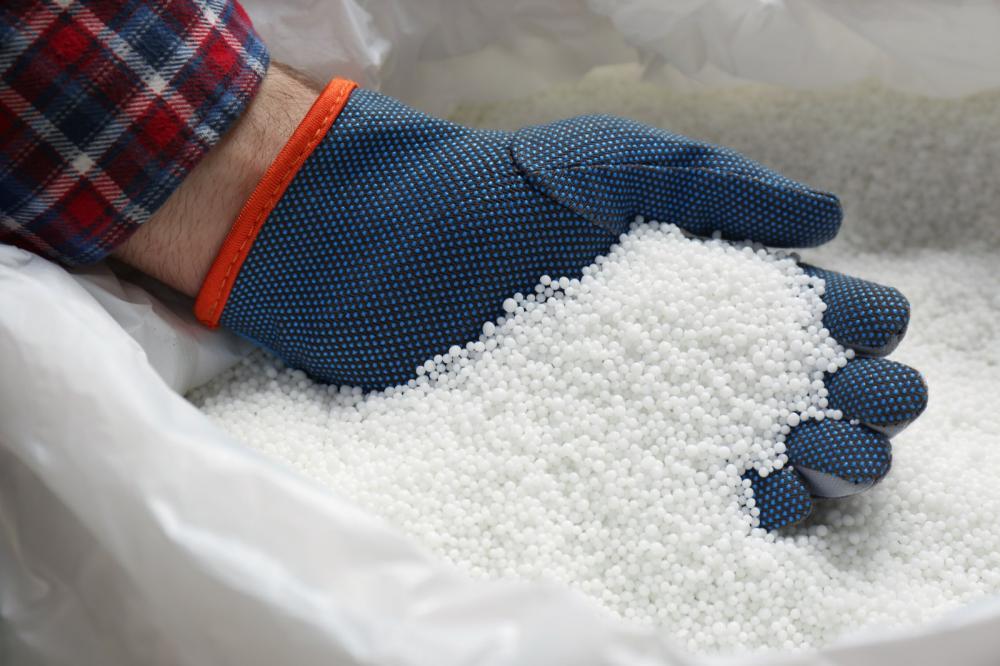

Urea fertiliser is the best-known nitrogen fertiliser on farms. Its analysis is 46-0-0: 46% nitrogen with no phosphorus or potassium. It is the most concentrated solid nitrogen fertiliser, so its effect on vegetative growth is fast and obvious, and so are its mistakes when applied at the wrong time or rate.
This article explains when you need urea, how much to use, and how to apply it without losing the nitrogen to the air.
What does urea do for plants?
- Boosts vegetative growth: more leaves and shoots and a deep green colour.
- Corrects nitrogen deficiency: symptoms include whole older (lower) leaves turning yellow and weak growth. More in our yellowing leaves article.
- Raises yields in leafy crops, field crops and lawns.
But excess nitrogen makes plants leggy at the expense of fruit, and attracts sucking pests such as aphids and whitefly to the soft growth.
When to use urea
- Vegetative stage: after germination or transplanting and before flowering.
- Leafy crops: such as rocket, lettuce, alfalfa and fodder, which need nitrogen all season.
- Lawns: to strengthen the green colour.
- After mowing or pruning: to encourage new growth.
Cut back at flowering and fruiting, when plants need more potassium and phosphorus.
How much urea to apply
These rates come from the SABIC urea label:
- Field crops: 100 to 120 kg per feddan, roughly 24 to 29 kg per 1,000 m².
- Vegetables: 50 to 100 kg per feddan, roughly 12 to 24 kg per 1,000 m².
- Fruit trees: 0.5 to 1.5 kg per tree depending on size.
Most importantly, split the amount into two or more applications through the season rather than one, because nitrogen is quickly lost with irrigation and volatilisation.
How to apply urea correctly
- Work it into the soil or irrigate straight after: urea left on a hot, moist surface turns into ammonia and escapes into the air.
- Keep it away from stems and leaves: urea granules burn plant tissue on contact.
- With drip irrigation: urea dissolves fully in water and can be injected in small, frequent doses.
- Foliar feeding: only at a very low concentration in cool weather; a ready high-nitrogen foliar fertiliser with micronutrients is a better choice. See our foliar fertiliser article.
Granular or prilled urea?
- Granular: for broadcasting in fields; easier to spread and slower to dissolve.
- Fine (prilled): dissolves faster and suits mixing into irrigation water.
Urea vs other fertilisers
- Urea vs DAP: urea is nitrogen only for vegetative growth, while DAP is mainly phosphorus for roots and flowering.
- Urea vs ammonium sulphate: ammonium sulphate has less nitrogen (21%) but adds sulphur and has an acidifying effect, which suits alkaline soils.
- Urea vs high-nitrogen NPK: NPK adds phosphorus, potassium and micronutrients for more balanced feeding. See our NPK article.
Common urea mistakes
- Broadcasting on the surface without irrigation: much of it volatilises.
- A large single dose: burns roots and is lost with water.
- Continuing at fruiting: excess leafy growth and fewer fruits.
- Mixing with alkaline materials such as lime: increases nitrogen loss.
- Giving young seedlings a mature-plant dose: burns them easily.
Products from Orkida
- SABIC urea 46%, 50 kg granular
- Agroleaf Power 31-11-11 high nitrogen by Everris
- Libro 30-10-10 high nitrogen by Astrachem
- FertDrip 28-14-14 high-nitrogen foliar fertiliser
Urea fertiliser FAQs
Is urea suitable for date palms?
Yes, in moderate split doses with immediate irrigation, but palms also need potassium and organic matter. Avoid excess during pollination and fruit set.
Can I spray urea on leaves?
Possible at a very low concentration in cool weather, but a ready foliar fertiliser is safer and better absorbed.
Why are leaf tips burnt after urea?
Usually the dose was too high, the granules touched leaves or stems, or there was no irrigation after application.
How long does urea take to show results?
Usually a few days to a week before the green deepens, depending on temperature and soil moisture.