
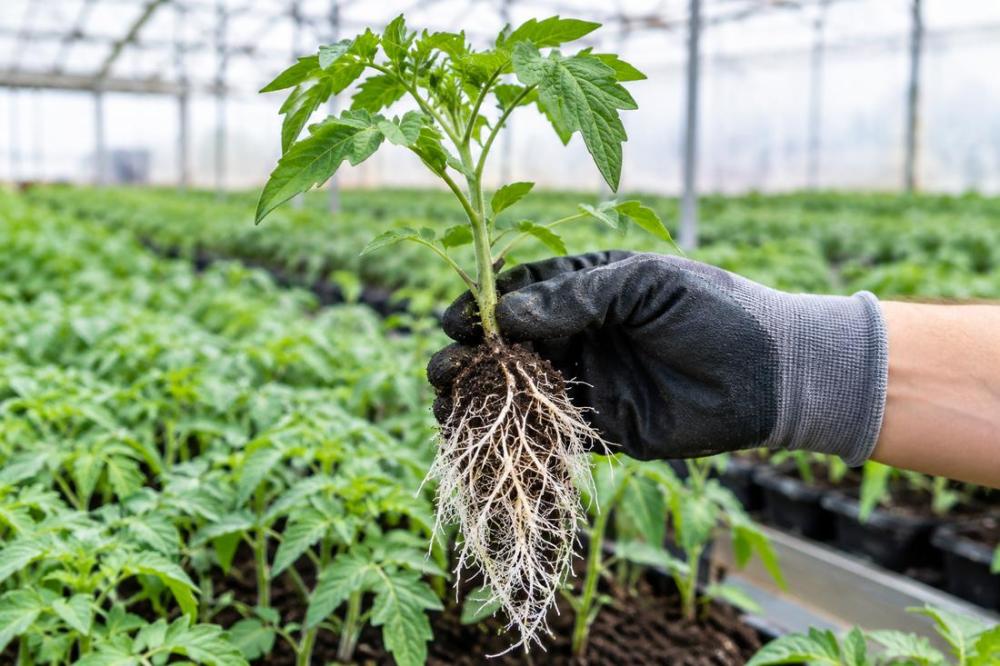

Potassium phosphite is one of the products growers use most to strengthen roots and raise plant resistance to root rots and downy mildew. But many confuse it with ordinary phosphate and treat it as a phosphorus fertiliser, when in fact it works in a completely different way.
In this article we explain what phosphite is, how it differs from phosphate, when to use it, and the correct rates for foliar spray and irrigation.
What is potassium phosphite?
- A compound of phosphorus and potassium in phosphite form (PO₃) rather than phosphate (PO₄).
- The plant absorbs it quickly through leaves and roots, and it moves both up and down inside the plant.
- It activates the plant's natural defences against the fungi that cause root rots, such as Phytophthora and Pythium, and against downy mildew.
- It supplies the plant with potassium directly.
Phosphite versus phosphate
- Phosphate: the phosphorus source the plant actually feeds on to build roots and flower.
- Phosphite: its main job is boosting immunity and stimulating roots, and the plant does not use it as a phosphorus source the way it uses phosphate.
- Bottom line: phosphite does not replace your normal phosphorus fertiliser; use it alongside it, not instead of it.
When to use potassium phosphite
- Straight after transplanting to stimulate new roots.
- Preventively before the root-rot and downy mildew season, especially with humidity and over-watering.
- After root stress from heat, salinity or irregular irrigation.
- Before flowering and during fruit set to support the plant through that stage.
Rates (Codaphos K: 42% P₂O₅ and 28% K₂O)
Foliar spray
- Vegetables (tomato, cucumber, pepper, aubergine, potato): 1 to 3 ml per litre of water, starting after transplanting and repeated every 10 to 15 days.
- Fruit trees (citrus, grapes, mango, olive): 1.5 to 3 ml per litre of water, 3 to 4 times per season.
- Strawberries: 1.5 to 2.5 ml per litre of water every 10 to 15 days.
- Ornamentals and nurseries: 1 to 2 ml per litre of water.
Through irrigation
- Vegetables, fruit and strawberries: 5 L per hectare per irrigation, repeated 2 to 4 times per season.
Tips for use
- Spray early in the morning or before sunset and avoid midday heat.
- Do not exceed the rate, as too much can scorch the leaves instead of helping.
- Do a jar test before mixing it with any fertiliser or pesticide.
- Phosphite strengthens prevention only; once infection has taken hold you need a suitable fungicide alongside it.
Products from Orkida
- Codaphos K Potassium Phosphite, 1 L: foliar 1 to 3 ml per litre.
- Codaphos K Potassium Phosphite, 5 L: for farms and larger areas, 5 L per hectare through irrigation.
Frequently Asked Questions
Is potassium phosphite a phosphorus fertiliser?
No, the plant does not use it as a phosphorus source the way it uses phosphate; its main job is strengthening roots and immunity.
Is phosphite a fungicide?
It activates the plant's defences and helps prevent root rots and downy mildew, but it does not replace a fungicide when infection is severe.
What is the phosphite spray rate?
1 to 3 ml per litre of water depending on the crop.
How often should I spray potassium phosphite?
Every 10 to 15 days for vegetables and strawberries, and 3 to 4 times per season for trees.
Can it be used through drip irrigation?
Yes, 5 L per hectare per irrigation, repeated 2 to 4 times per season.