
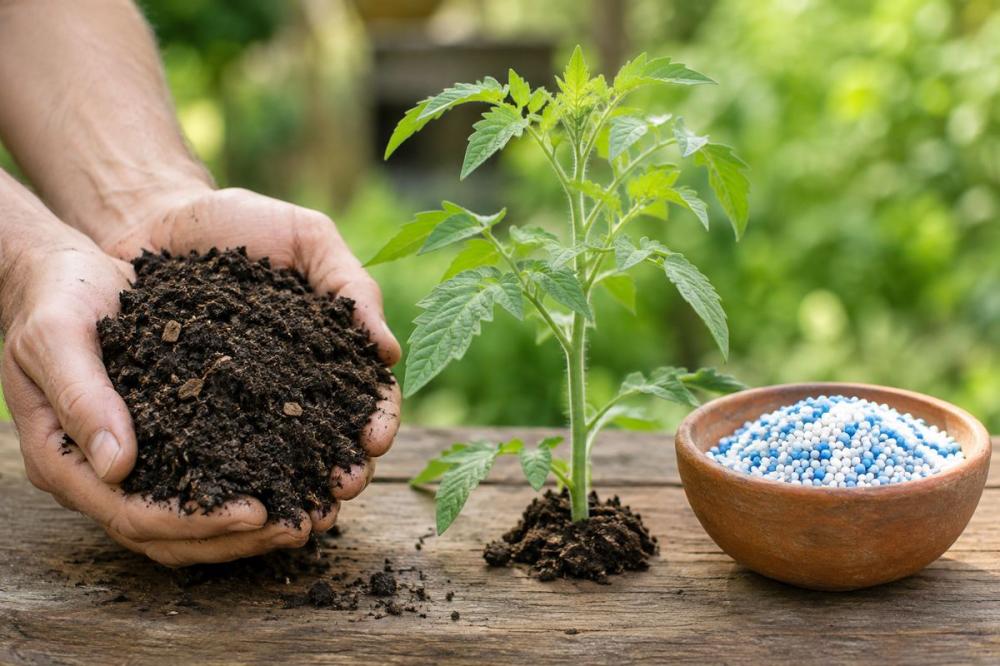

A common question is: organic or chemical fertilizer, which is better? The honest answer is that neither replaces the other. Organic fertilizer builds the soil over the long term, while chemical fertilizer gives the plant fast, measured nutrition. The key is knowing what each one does and when to use it.
In this article we explain the difference between them, the pros and cons of each, when to choose organic and when to choose chemical, and how to combine them at the right rates.
What is organic fertilizer?
Organic fertilizer comes from natural materials that have broken down, such as:
- Farmyard manure (cow and sheep manure) after it has been composted and sanitised.
- Compost: decomposed plant residues and organic waste.
- Vermicompost: produced by earthworms breaking down organic matter.
- Humic and fulvic acids and seaweed extracts.
Its main job: it improves soil structure, helps soil hold water and nutrients, and feeds beneficial soil life. It gives the plant gentle nutrition that is released slowly.
What is chemical fertilizer?
Chemical (mineral) fertilizer is manufactured with known, fixed nutrient levels, such as:
- Compound NPK fertilizers: like 20-20-20 or 12-12-17, where the numbers are the percentages of nitrogen, phosphorus and potassium.
- Straight fertilizers: like urea (nitrogen) or potassium sulphate.
- Chelated micronutrients: like iron, zinc and manganese.
Its main job: it gives the plant the exact nutrient it needs, in the right amount, quickly, with results visible within days.
The difference between organic and chemical fertilizer
Speed
- Organic: slow; it breaks down gradually and feeds the plant over weeks and months.
- Chemical: fast, especially water-soluble fertilizers applied through irrigation or as a foliar spray.
Nutrient content
- Organic: low and variable, so you cannot calculate exactly how much nitrogen you have given the plant.
- Chemical: high and printed on the pack, so you can calculate the dose precisely.
Effect on soil
- Organic: helps sandy soil hold water and loosens heavy clay so it drains and breathes better.
- Chemical: does not improve soil structure, and overuse raises soil salinity over time.
Risk of burning
- Organic: low risk if fully composted. Fresh manure burns roots and brings weed seeds and pests.
- Chemical: overdosing burns roots and leaves quickly, so stick to the rate.
Cost and quantity
- Organic: you need large amounts, measured in kilos per square metre, but the effect lasts.
- Chemical: you need small amounts, measured in grams, but you apply it more often.
When to choose organic fertilizer
- Before planting to prepare the soil, especially poor sandy soil.
- When planting trees and palms, in the planting hole and around them every year.
- In pots and planters as part of the growing mix.
- When the soil is compacted or does not hold water.
When to choose chemical fertilizer
- When there is a clear deficiency of a nutrient, such as yellow leaves or poor flowering.
- During fast growth stages such as early vegetative growth, flowering and fruit sizing.
- With drip irrigation, because soluble fertilizers move easily with the water.
- When you need a quick result within days.
The best approach: combine them
The method most successful growers rely on:
- An organic base before planting: for example, composted cow manure at 2 to 5 kg per square metre mixed into the soil, or 20 to 30 kg per 100 m² on farmland.
- Light chemical feeding during growth: for example, soluble 20-20-20 at 1 to 2 g per litre of water as a spray or through irrigation.
- A liquid organic soil conditioner through irrigation to stimulate roots, such as humic and fulvic acid at 1 to 2 ml per litre for trees and greenhouses.
This way the soil improves year after year, and the plant gets its food when it needs it.
Organic fertilizer rates by use
- Gardens and house plants: 2 to 5 kg per square metre, mixed into the soil.
- Fruit trees: 5 to 15 kg per tree depending on age and size.
- Palms: 30 to 50 kg per palm.
- Pots and planters: 20 to 30% of the mix volume.
Common mistakes
- Using fresh manure instead of composted manure, which burns roots and brings weeds and flies.
- Relying on organic fertilizer alone for a fast crop, leaving the plant weak because it did not get enough nutrients.
- Overdosing chemical fertilizer hoping for faster results, which burns leaf tips and salts the soil.
- Placing fertilizer against the stem instead of spreading it over the root zone.
- Fertilizing dry soil. Water before and after feeding.
Products from Orkida
- Black Cow Organic Cow Manure, 25 kg: heat-treated natural compost; 2 to 5 kg per m² in gardens and 5 to 15 kg per tree.
- Vermicompost Earthworm Fertilizer, 1 kg: mix into the soil before planting and add around plants every 4 to 6 weeks.
- Bavaria 20-20-20 Balanced Fertilizer, 2 kg: 1 to 2 kg per 1,000 litres of water (1 to 2 g per litre) as a spray or by drip.
- Blaukorn 12-12-17 Granular Fertilizer, 25 kg: about 10 g per plant on the soil, repeated monthly.
- Clever 12% Liquid Humic and Fulvic Acid, 20 L: 1 to 2 ml per litre for trees and greenhouses, and 4 ml per litre for open-field vegetables.
Frequently Asked Questions
Which is better, organic or chemical fertilizer?
Neither is better in every case. Organic fertilizer improves soil over the long term, while chemical fertilizer gives fast, precise nutrition. The best approach is to combine them: organic before planting and light chemical feeding during growth.
Is organic fertilizer enough on its own?
It is enough for house plants and gardens that do not need high yields. Vegetables and fruit trees need extra chemical feeding during flowering and fruiting.
Does chemical fertilizer damage the soil?
Not at the right rate. Damage comes from overuse, which raises soil salinity over time, especially without leaching irrigation.
Can I combine organic and chemical fertilizer?
Yes, and that is the best approach. Put organic matter into the soil before planting, and add soluble fertilizer through irrigation or as a spray during growth.
When will I see results from organic fertilizer?
Soil improvement shows within weeks to months, and builds up as you add it each season.