
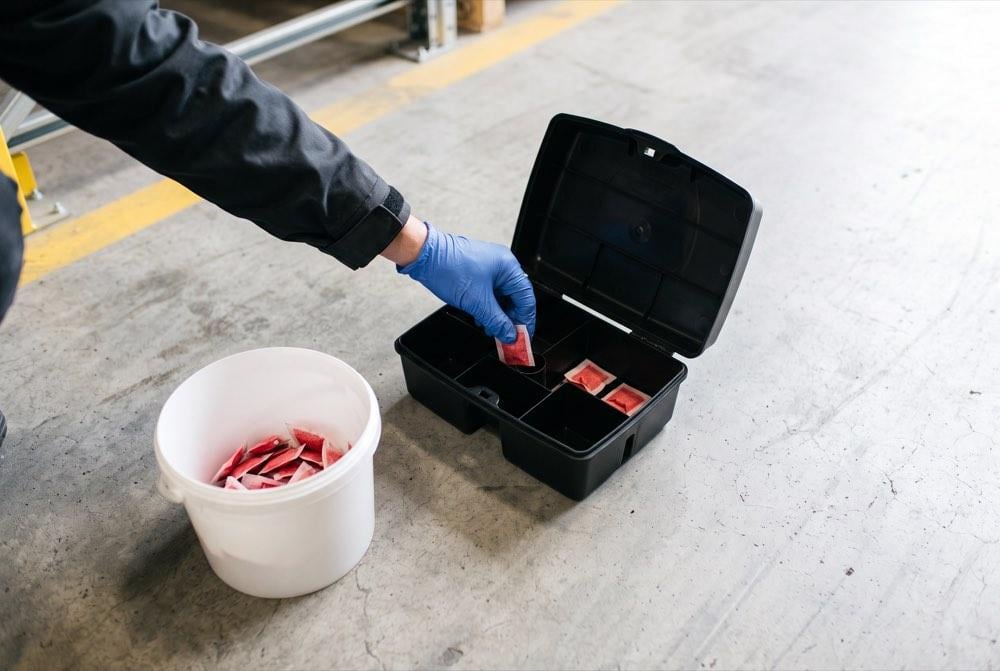

What is chlorophacinone? An active ingredient in rodent baits, a first-generation anticoagulant. The big difference from the second generation: the rodent must feed on it for several days in a row to die, not a single feed. Death follows 5 to 7 days after feeding begins.
How does it work?
It stops the liver from using vitamin K, so the blood cannot clot.
- A single dose is small and not enough.
- With daily feeding it builds up in the body.
- After a few days internal bleeding begins and the rodent dies quietly.
Why would anyone choose first generation?
It looks weaker, but it has its place:
- Lower risk to other animals: it clears from the rodent's body faster, so a cat or bird that eats a poisoned rodent is at lower risk.
- One accidental bite does not do what second-generation actives do, because it needs repetition.
- It suits long programmes on farms, in warehouses and around homes.
First generation vs second generation
Feeds
- Chlorophacinone (first gen): Several days in a row
- Second generation: One or two feeds
Time to death
- Chlorophacinone (first gen): 5 to 7 days
- Second generation: 3 to 7 days
Bait needed
- Chlorophacinone (first gen): More
- Second generation: Less
Risk to other animals
- Chlorophacinone (first gen): Lower
- Second generation: Higher
Resistant rodents
- Chlorophacinone (first gen): May be unaffected
- Second generation: Works on them
The golden rule: never let the bait run out
This is the key point with chlorophacinone. If the bait runs out for a day or two, the rodent recovers and you start from zero.
- Refill stations daily in the first week.
- Put out more than you expect to be eaten.
- Add bait points if everything is eaten quickly.
- Continue for at least two weeks, and until feeding stops.
When is it the wrong choice?
- A heavy infestation you need gone fast.
- A place with plenty of food competing with the bait, so rodents do not feed on it daily.
- Rodents unaffected after two weeks of steady feeding. These are usually resistant and need a second-generation active.
- You cannot monitor and refill.
How to use it properly
- Inside a locked bait station on rodent runs.
- Remove other food sources as far as you can, so rodents rely on the bait.
- Amount and spacing as the label says.
- Check daily and refill.
- Collect dead rodents and leftover bait when finished.
If swallowed by accident: go to a hospital or vet with the pack. Treatment is vitamin K1 under medical supervision.
Products from Orkida
Chlorophacinone FAQs
Does one feed kill a rodent?
Usually not. It needs to feed for several days in a row.
Is it safe for cats and dogs?
Lower risk than second generation, not safe. If they eat enough of the bait itself they are affected. A locked station is a must.
Rodents have been feeding for two weeks and are still alive. What now?
Switch to a second-generation active. This usually means the rodents are resistant to first generation.