
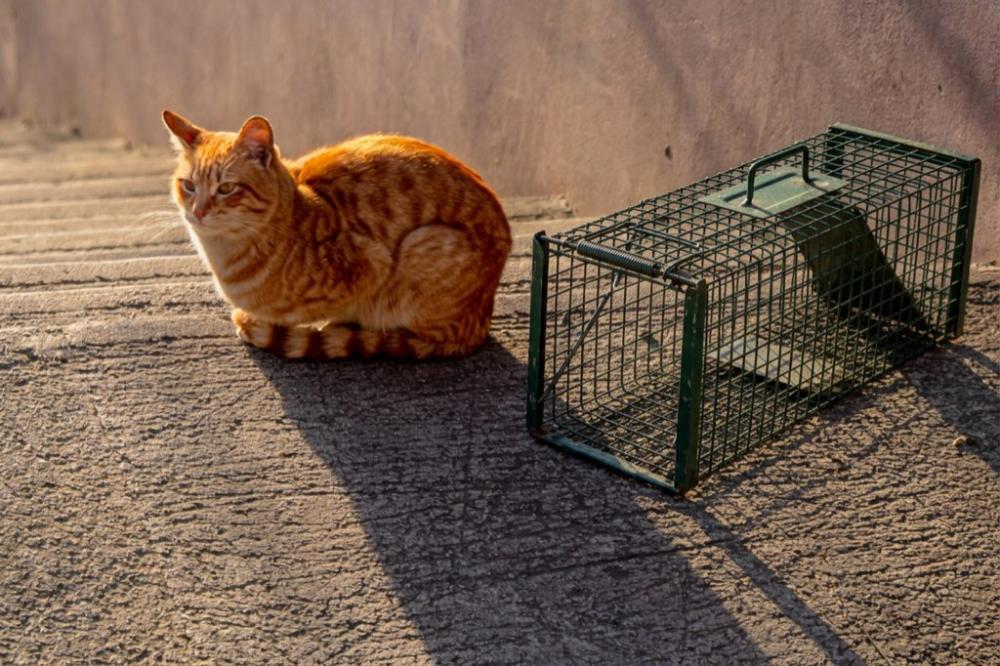

A cat trap is the cleanest and safest way to deal with stray cats that get into the yard, nest on the roof or tear open rubbish bags. The right trap catches the cat alive without harming it, and then you can relocate it through the proper channels.
This article explains how to choose the trap size, the best bait, where to place it, and how to handle the cat once it is caught.
How does a cat trap work?
- A cat trap is a metal cage with one or two doors.
- In the middle of the cage is a trigger plate under the bait.
- When the cat walks in and steps on it, the door closes automatically and the cat stays inside unharmed.
- There is no poison, glue or sharp parts.
One door or two?
- Single-door trap: the cat enters from one side; suitable for narrow spaces next to a wall.
- Two-door trap: open at both ends, so the cat can see a way out and feels safer going in, which improves results with cautious cats.
Small or large?
- Small size (about 67 to 69 cm): for small and medium cats.
- Large size (about 82 to 100 cm): for large cats and cats that hesitate to enter short cages.
- Galvanized steel: stands up better to sun and humidity, suitable if the trap will stay outside for a long time.
Best bait for a cat trap
- Tuna or sardines in oil, because the strong smell attracts cats from a distance.
- Chicken pieces or cooked meat scraps.
- Wet cat food.
- Place the bait behind the trigger plate at the back of the cage, so the cat steps on it on the way to the food.
- A little tuna oil at the trap entrance draws the cat inside.
Where to place the trap
- On the route the cat uses every day.
- Near where it feeds or causes trouble.
- On flat, stable ground, so the trap does not move and scare the cat.
- In a shaded spot, out of direct sun.
- Away from your own pets so they are not caught by mistake.
Setting up the trap
- Open the door or doors and set the trap according to its instructions.
- Test the trigger plate with your hand or a stick before adding bait, and make sure the door closes easily.
- Lay newspaper or thin cardboard on the cage floor so the cat does not feel the wire under its paws.
- Place the bait behind the trigger plate.
- Cover the top and sides of the trap with a light cloth, because cats prefer covered spaces.
- Move away, because your presence makes the cat hesitate.
Tip for cautious cats
- Put food inside the open trap with the trigger locked for two or three days.
- Let the cat get used to eating there without the door closing.
- Then set the trap, and the cat will usually walk in without hesitating.
After the cat is caught
- Check the trap every few hours and do not leave the cat confined for long.
- Cover the trap with a cloth to calm the cat.
- Do not open the trap by hand while the cat is frightened, as it may scratch or bite.
- Contact the municipality or animal welfare groups in your area to collect it or advise on the proper way to relocate it.
- If the cat is injured or sick, it is best to contact a vet.
How to stop cats coming back
- Close rubbish bins with tight lids.
- Do not leave food uncovered in the yard or on the roof.
- Block gaps cats use to reach the roof or get under stairs.
- Clean their toilet spots thoroughly, because the smell draws them back.
Products from Orkida
- ProCatch small two-door cat trap
- ProCatch large two-door cat trap 100 cm
- ProCatch large galvanized cat trap
- ProCatch small galvanized cat trap
Cat trap FAQs
Does a cat trap hurt the cat?
No, the trap catches the cat alive and unharmed and has nothing that can injure it, as long as it is not left inside for long.
How long does it take a cat to enter the trap?
Some cats go in within hours; cautious cats can take two or three days, which is where the get-used-to-it method helps.
What if I catch a cat I did not mean to?
Open the rear door while standing away from the entrance and let it walk out calmly.
Can I use a cat trap for dogs?
A cat trap is too small for most dogs; dogs need a dog trap of a larger size.