
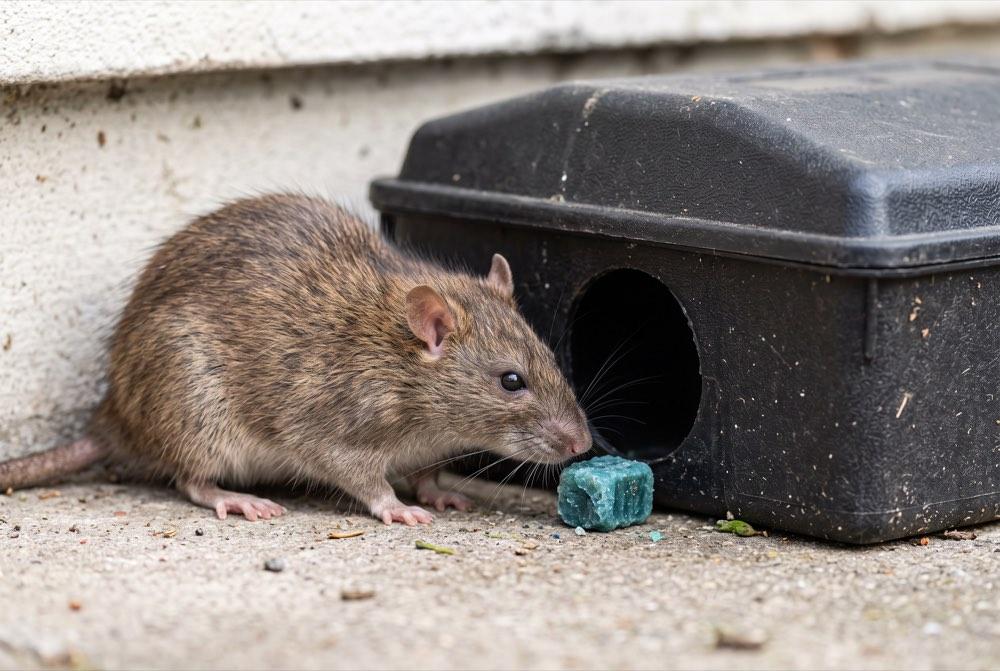

What is brodifacoum? An active ingredient in rodent baits, a second-generation anticoagulant. A mouse eats it once and that is enough, but it does not die straight away: death comes 3 to 7 days later. The delay is deliberate, because the other rodents do not link the bait to the death and keep feeding.
How does it kill rodents?
A rodent needs vitamin K for its blood to clot. Brodifacoum blocks vitamin K recycling in the liver.
- First day or two: the rodent behaves and feeds normally.
- After that: clotting reserves run out and internal bleeding begins.
- Day 3 to 7: it weakens, becomes sluggish and dies, usually in its nest.
Why is it called second generation?
Feeds needed
- First generation: Several feeds in a row
- Second generation: One feed is enough
Resistant rodents
- First generation: Some are unaffected
- Second generation: Works on them
Persistence in the body
- First generation: Short
- Second generation: Long
Risk to other animals
- First generation: Lower
- Second generation: Higher
Brodifacoum is among the most potent second-generation actives.
Brodifacoum or difenacoum?
Both are second generation and usually at the same bait strength (0.005%). The difference is potency:
- Brodifacoum: stronger; one feed is enough for mice and rats. Suits heavy infestations, large rats and rodents that other baits failed on.
- Difenacoum: slightly milder; a rat may need more than one feed. Suits ordinary infestations and places where you want lower risk.
Bait forms
- Wax blocks: withstand moisture and suit sewers, basements and yards. They fix inside the station so rodents cannot drag them away.
- Soft baits: stronger smell and faster uptake; suit places with competing food.
- Pellets and grain: for dry places.
How to use it properly
- Place it inside a locked bait station, never exposed.
- On rodent runs: along walls, behind appliances, near entry holes.
- Amount and spacing as the label says. Rats need closer points and more bait than mice.
- Check every few days and refill what was eaten.
- Continue until feeding stops.
- Wear gloves when placing it, for safety and so your scent does not put rodents off.
- Collect dead rodents and leftover bait when finished.
The key point: other animals
Brodifacoum stays in the rodent's body. A cat, dog or bird that eats a poisoned rodent can be affected.
- Always a locked station, especially around children or pets.
- Collect dead rodents promptly; do not leave them outside.
- Never use it exposed in a yard or farm.
- If swallowed by accident: go to a hospital or vet immediately with the pack. The known treatment is vitamin K1 under medical supervision.
Products from Orkida
- Talon wax blocks by Syngenta
- Pro Pasta soft bait
- Brigand B soft bait
- Vertox soft bait
- ProCatch bait station
- Professional rodent control kit
Brodifacoum FAQs
Why is the rodent still alive after eating the bait?
Because it takes 3 to 7 days to work. If the bait is being eaten, things are on track. Be patient and keep refilling.
Will the rodent die inside the house and smell?
It can. Most die in their nests, some inside a wall or ceiling. Stations placed outside the house reduce the chance.
Does it work on large rats?
Yes, and that is one of its strengths. One feed is enough for a rat.
Do rodents become resistant to it?
Resistance is rare compared with first-generation actives. If the bait is not being eaten, the problem is usually placement or competing food, not the active.