
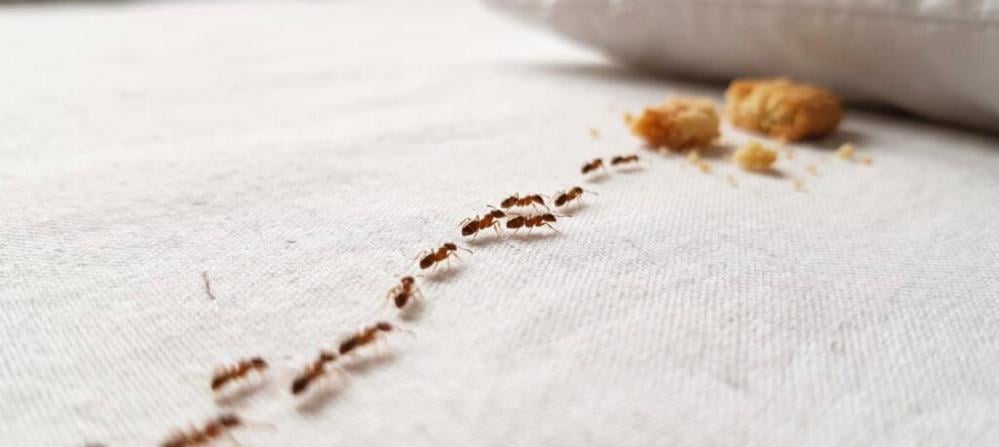

Ants in the bedroom or on the bed usually mean there is food, sweets or water nearby, or that the nest itself is in a wall or window close to the room. Ants do not reach the bedroom by chance; they come because they found something and now follow a steady trail to it.
Why ants appear in the bedroom
- Eating in the room: biscuit crumbs, sweets, empty juice or soft drink cans.
- Children: traces of milk or sweets on pillows and sheets.
- Cat or bird food kept inside the room.
- Moisture: a leak from a window AC, a split unit, or an adjoining bathroom.
- Indoor plants: a pot with damp soil may hold a nest.
- Gaps around the window and AC that let them in from outside.
Why are there ants on the bed?
- Food crumbs or sweet drinks spilled on the bedding.
- The bed is close to the wall holding the nest or the ant trail.
- Sweat and moisture attract some small ant species.
Important: if you find winged insects coming out of a wall or wood in the room, make sure they are not termites. See Flying Ants.
How to get rid of ants in the bedroom
- Stop eating in the room during treatment, and vacuum crumbs under the bed and bedside tables.
- Wash sheets and pillows, and remove any sweet source.
- Follow the ant trail to find where they enter: window, socket, or a crack in the skirting.
- Apply ant gel on the trail and near the crack they come from, not on the bed or pillows.
- Never spray insecticide on the bed or bedding.
- Once they are gone, seal cracks around the window, AC and skirting boards.
For signs of a nest inside the home, see Signs of Ants in the House.
Products from Orkida
Bedroom ant FAQs
Do ants bite while I sleep?
Some species bite if pressed or threatened, such as fire ants. But most small house ants do not seek out people; they come for food.
Should I spray insecticide in the bedroom?
No general spraying is needed. Gel on the ant trail and near the entry point is safer and more effective, and any spraying should only be around windows and entry points outside.
How long do ants take to disappear after gel?
Usually one to two weeks, and it is normal to see more ants around the gel in the first two days as they carry it to the nest.