
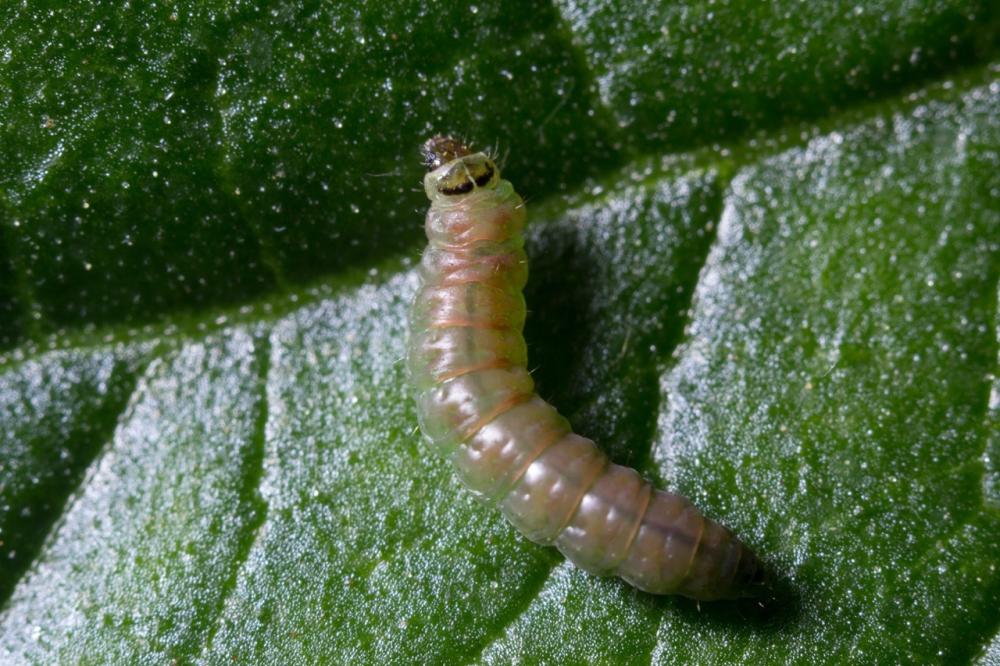

You plant tomatoes carefully, and after weeks you see winding transparent tunnels and brown patches on leaves, then small holes in green fruit near the calyx. This is Tuta absoluta, a small nocturnal moth whose larvae mine inside leaves, stems and fruit, so tissue shields them from most contact spray. It can destroy a large share of the crop in a few weeks in greenhouses if not monitored early, and it builds resistance to insecticides quickly. In this guide we explain how to recognise its first signs, its life cycle, why it returns after spraying, and how to build a plan combining pheromone traps, netting, farm hygiene and rotation of active ingredients.
The danger of this insect lies in its high reproductive capacity: it can produce several generations per year, and it can destroy a large part of the crop if it is not controlled early.
Pest: A small moth whose larvae dig tunnels inside tomato leaves, stems, and fruit, and it is considered one of the most dangerous tomato pests worldwide.
Sign: Tunnels and transparent patches on leaves with black droppings inside them, and small holes in the fruit.
Danger: It multiplies quickly and can destroy a large share of the crop in greenhouses and fields if left uncontrolled.
Monitoring: Pheromone traps detect the moth early, before obvious damage appears on the plant.
Rule: An integrated program that combines traps, sanitation, and rotation of active ingredients, because relying on a single insecticide leads to resistance.
Symptoms of Tuta absoluta Infestation
- Oval or irregular tunnels inside tomato leaves.
- Wilting and drying of infected leaves because of the loss of photosynthesis.
- Fruit that is perforated or deformed, sometimes with larval remains inside.
- Small green or brown larvae visible inside the tunnels.
- A sharp drop in yield because of damage to leaves and fruit.
Most Affected Crops
- Tomato (the main and most affected crop).
- Pepper.
- Eggplant.
- Potato (to a lesser extent).
Tuta absoluta Life Cycle
- Eggs: Laid singly on the underside of leaves or on fruit, and hatch within 4–6 days.
- Larvae: They enter leaves and fruit to feed inside, forming distinctive tunnels, and this stage lasts about 12–15 days.
- Pupa: The larva turns into a pupa either in the soil or between leaves, and this stage lasts 7–10 days.
- Adult: A small grayish-brown moth that is active at night and begins laying eggs again.
- The full cycle takes about 25–30 days in summer, and with higher temperatures it can speed up and produce several overlapping generations.
Economic Damage
- Large direct losses in tomatoes when the pest is neglected.
- Lower fruit quality and deformation, which reduce market value.
- Higher control costs because of the pest’s rapid reproduction.
- Difficult to eliminate at later stages because it lives inside leaves and fruit.
Prevention Methods
- Remove crop residues and infested weeds immediately after harvest.
- Use tight netting on greenhouses to keep the moths out.
- Install pheromone traps to monitor moth numbers and limit their reproduction.
- Follow a crop rotation and avoid planting tomatoes continuously in the same soil.
- Collect and burn infested leaves and fruit to reduce sources of infection.
How Do You Tell Tuta absoluta Tunnels from Others?
- Winding tunnels inside the leaf that turn into transparent brown patches, usually containing the larva and its black droppings.
- Holes in green fruit near the calyx, which fungi and bacteria may enter and cause the fruit to rot.
- Small larvae inside the stem and terminal buds in severe infestations.
- Catching moths in pheromone traps confirms the pest is present before major damage appears.
Why Does It Spread So Quickly in Greenhouses?
The insect reproduces through several generations per season and adapts quickly to the moderate temperatures inside greenhouses, and the female lays large numbers of eggs on leaves and stems. Because the larva lives inside the leaf, many contact insecticides do not reach it, so successful control depends on early monitoring and combining different methods.
Integrated Control Plan
- Place pheromone traps from the start of the season to monitor and reduce numbers.
- Inspect the lower and middle leaves weekly for the first tunnels.
- Remove heavily infested leaves and dispose of them securely in sealed bags.
- Spray at the start of infestation with an insecticide suitable for the crop, covering the whole plant.
- Rotate active ingredients and do not repeat the same group, because the pest develops resistance readily.
- Seal greenhouse openings with fine netting to keep the moths out.
Common Mistakes in Tuta absoluta Control
- Waiting until infested fruit appears.
- Relying on a single type of insecticide all season.
- Leaving old crop residues in the field or greenhouse.
- Not using traps for monitoring.
Active Ingredients for Tuta absoluta Control
Specialized insecticides:
- Emamectin benzoate: Use at the rate stated on the label.
- Spinosad: Use at the rate stated on the label.
- Spinetoram: Use at the rate stated on the label.
- Chlorantraniliprole: Use at the rate stated on the label.
- Indoxacarb: Use at the rate stated on the label.
Practical Tips for Farmers
- Start control as soon as you notice the first infestation or catch moths in the traps.
- Focus on young leaves and fruit, because they are the main target of the larvae.
- Do not use the same active ingredient repeatedly. Rotate between them to avoid resistance.
- Combining pheromone traps with regular spraying greatly reduces insect numbers.
How to Read Pheromone Traps and Decide Spray Timing
Place a pheromone trap in each greenhouse from the start of the season, check it twice weekly and record moth counts. If the count rises week to week begin inspecting young leaves for the first tunnels, and plan spraying before tunnels become widespread. Moths in the trap without tunnels means it is still early and monitoring alone is enough.
Protecting the Greenhouse from Entry
Moths enter through vents and doors, so keep netting fine and intact, use a double door and remove old crop residue immediately. Finally do not repeat the same chemical group, read the product label, and visit one of our branches with a photo of the tunnels and we will guide you to the right product for your crop.
Tuta absoluta Control Products from Global Brands
- Coragen 20 SC by FMC: For Tuta absoluta and leafworms, 200 ml pack.
- Voliam Targo by Syngenta: Systemic insecticide for Tuta absoluta larvae and leafminers, 250 ml pack.
- Exirel 10 SE by FMC: For Tuta absoluta, thrips, aphids, and whiteflies, 250 ml pack.
- Biobest Black Sticky Board: For monitoring and controlling Tuta absoluta, 10 boards.
You can find all the options in the Agricultural Insecticides category. Combine traps for early monitoring with insecticides, and rotate active ingredients to reduce resistance.
Frequently Asked Questions About Tuta absoluta
Does Tuta absoluta attack only tomatoes?
Tomato is its most important host, but it may also attack other crops in the nightshade family, such as potato and eggplant.
What is the first sign I should look for?
Winding tunnels on the leaves and small moths appearing in pheromone traps. It is best to act then, not after infested fruit appears.
Are pheromone traps enough for control?
They help a great deal with monitoring and reducing numbers, but they should be part of an integrated program with suitable spraying, sanitation, and greenhouse netting.
Why does the infestation return after spraying?
Because the larvae inside the leaves are not always reached by the insecticide, repeating the same insecticide increases resistance, and moths may enter from outside if the greenhouse is not sealed.