
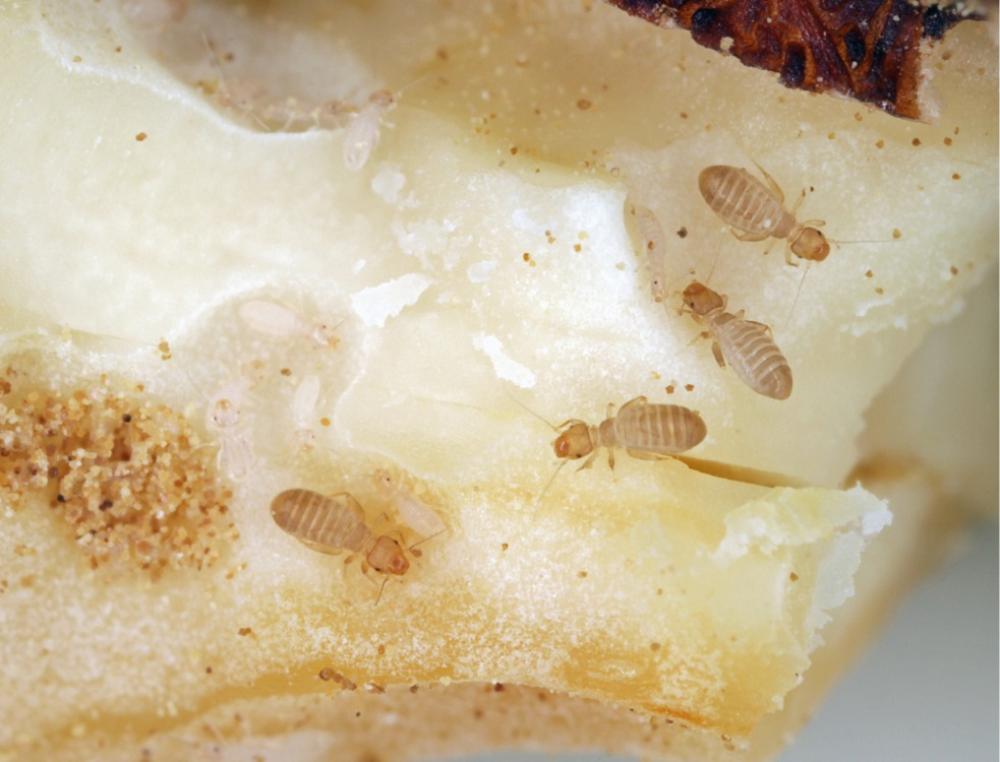

Booklice are small insects belonging to the order Psocoptera (psocids). They are harmless to people but can be a considerable nuisance, especially in damp places such as libraries and warehouses. Although they do not bite or sting humans, booklice feed on fungi and mold, and they can damage books, papers, and furnishings that contain organic material.
Scientific name: Booklice belong to the order Psocoptera (psocids) and are not true lice.
Size and color: A tiny insect, 1 to 2 mm long, translucent or light brown, and some species are wingless.
Where it lives: In warm, damp places such as old books, storerooms, cabinets, and bathrooms.
How serious it is: It does not bite or sting people. It feeds on fungi and mold and may damage paper.
Best time to act: When dampness or mold appears, by drying and cleaning the area before any treatment.
What Booklice Look Like
Booklice are very small insects, about 1 to 2 mm long, with a flat body that is usually translucent or light brown. They have long antennae and small wings, although some species are wingless. Even though booklice cause no direct harm to people, they can be a source of annoyance, especially when their numbers build up in certain places.
Where Booklice Are Found
Booklice prefer damp, warm environments, which makes them common in places such as:
- Libraries: where there are many old books.
- Warehouses: especially those holding paper or decomposable materials.
- Damp homes: in areas with high humidity such as bathrooms and kitchens.
- Enclosed spaces: such as cabinets or shelves where dust and moisture can build up.
Booklice Life Cycle
The female booklouse lays her eggs in damp places. The eggs are usually very small and stick to surfaces such as books or walls. After a period of time, the eggs hatch into nymphs that resemble the adult insect but are smaller. Over time, the nymphs grow and become adults able to reproduce. Under favorable conditions, this cycle can proceed quickly.
How to Get Rid of Booklice
If you have a booklice problem in your home, here are some effective ways to get rid of them:
- Reduce humidity: Booklice prefer damp environments, so it is important to improve ventilation in your home and lower humidity levels with dehumidifiers or by opening windows regularly.
- Clean the affected areas: Make sure to clean stored books and papers regularly. Wipe shelves and bookcases with dry towels, and good ventilation prevents the insect from multiplying.
- Seal gaps and cracks: Booklice hide in tight spaces and cracks, so make sure to seal any gaps in walls or furniture, especially in damp areas.
- Use insecticides: If the infestation is severe, you can use Tandem insecticide or Tempo insecticide, which are effective against many household insects, including booklice.
How to Prevent Booklice
The best way to avoid a booklice infestation is prevention:
- Keep your home clean: Reduce the buildup of old papers and books.
- Improve ventilation: Make sure your home is well ventilated, especially in damp areas such as the bathroom and kitchen.
- Store books and papers in dry places: Make sure books and papers kept in cabinets or on shelves remain in dry, clean environments.
Specialized Insecticides for Booklice Control
- Tandem insecticide: Effective against a wide range of insects, including booklice, and works very well in indoor environments.
- Tempo insecticide: Contains active ingredients that help eliminate nuisance insects such as booklice, and can be used easily at home.
Options Available at the Orkida Store
International-brand products for treating cracks, the backs of shelves, and damp places where booklice and other small crawling insects hide:
- K-Othrine Dust 0.05 DP by Envu: A ready-to-use dusting powder for cracks, voids, and behind furniture, 1 kg pack.
- K-Othrine Partix by Envu (formerly Bayer): An insecticide for bed bugs, ants, cockroaches, and beetles, 1-liter bottle.
- Demon Max by Syngenta: An insecticide that controls more than 30 pests, including silverfish and beetles, 500 ml bottle.
You will find all the options in the booklice insecticides section. Do not spray insecticide directly on books and papers; treat the shelves and the cracks around them, and get rid of the dampness first.
How Do You Tell Booklice from Similar Insects?
The name booklice is misleading. It does not live on the human body or on animals, and it does not suck blood. To confirm the insect type, compare it with look-alikes:
- Booklice: Slightly smaller than a pinhead, pale in color, moves slowly, and sits on papers, walls, and damp shelves.
- Silverfish: Larger and faster, with an elongated silver body and long tails. You will find the details in the article Silverfish.
- Bed bugs: A flat brown insect that feeds on blood and leaves bites, which does not happen with booklice. See the bed bug guide if in doubt.
Why Do Booklice Suddenly Appear?
Large numbers usually mean dampness and slight mold that were not visible before. Common causes include:
- A leak or dampness in a wall, ceiling, or under sinks.
- Storing books, papers, or boxes in a damp, closed place for a long time.
- Dampness in new buildings or after renovation and painting work, until the materials dry well.
- Poor ventilation in cabinets and closed rooms.
Signs of Infestation
- Small pale insects moving on books, shelves, or walls, which scatter when stored items are moved.
- A light musty smell or mold spots on paper or cardboard.
- More insects during damp weather.
Home Treatment Steps
- Find the source of the dampness and fix it first, whether it is a leak or poor ventilation.
- Take books, papers, and boxes out of the affected place, shake off the dust, and expose them to dry air and ventilation.
- Wipe shelves and cabinets with a dry cloth, then clean them, and remove any visible mold.
- Vacuum the insects from shelves and corners, then dispose of the vacuum bag outside the home.
- Keep humidity low with regular ventilation, and you can use a dehumidifier in closed spaces.
- If the infestation is severe, you can use a registered product for spot treatment in cracks and behind shelves, following the product label and directions for use.
Safety note: Do not spray insecticides directly on books or papers, keep children and pets away from the area, and ventilate the room well during and after treatment.
How to Store Books and Papers to Avoid Booklice
- Choose a dry, well-ventilated place, and avoid damp floors and walls.
- Do not pack books and boxes too tightly; leave space for air to circulate.
- Make sure books and papers are completely dry before storing them, especially after exposure to dampness or leaks.
- Check closed boxes and cabinets every few months, and dust the shelves.
- Use airtight containers for important paper items in places where humidity is hard to lower.
When Should You Call a Professional?
If booklice come back after you dry and clean the place, spread to several rooms, or are linked to a leak whose source you cannot find, call a maintenance technician to fix the source of the dampness, then a licensed pest control company when needed.
Frequently Asked Questions About Booklice
Do booklice bite people?
No. They do not bite and do not live on the body, but large numbers are annoying and point to dampness.
Do they really damage books?
They mostly feed on mold and microscopic fungi, and they may harm paper and covers in severe infestations with prolonged dampness.
Do they go away on their own?
Their numbers may drop if the place dries out, but if dampness remains, they continue and multiply.
Is insecticide alone enough?
No. Insecticide without treating dampness and mold gives a temporary result, and then the insects return.
For more household pest guides, browse the Pest Library.
Does vinegar kill booklice?
Vinegar may clean light mold from a surface, but it does not treat the infestation or stop it returning. What matters is lowering humidity.
Are wood lice the same as booklice?
The term usually means a tiny insect that appears on damp wood and mold, from the same family. If you see wood dust or holes in the wood, the problem may be wood-boring insects or white ants and needs a different check.
Do booklice live in clothes?
They can appear in clothes and fabric stored in a damp, moldy place, but they feed on the mold on them, not on the clothes. Drying the place usually solves it.
How long does treatment take?
Numbers usually drop once the place dries and the mold source is removed. Some cases need follow-up for a few weeks until eggs disappear.
Conclusion
Booklice are not insects that pose a direct threat to people, but they can contaminate books and furnishings, and they may point to a damp, unhealthy environment. By following the right steps, such as reducing humidity, cleaning the affected areas, or using suitable insecticides like Tandem insecticide and Tempo insecticide, you can get rid of this insect effectively and enjoy a clean, healthy home.
If you need specialist help, you can order a pest control service from Orkida Pest Control.