
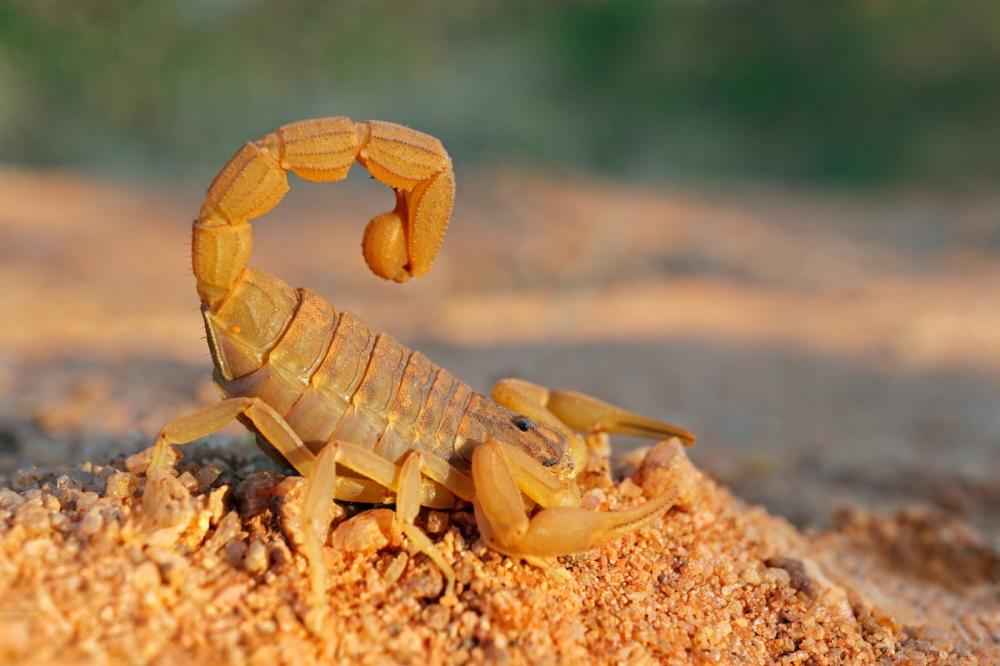

Seeing a scorpion walk across the tile floor at night is enough to upend the whole family's evening: is it a dangerous kind? What do we do if it stung a child? And where did it come from in the first place?
This article answers these three questions in the order you actually need them: how to estimate the danger from the scorpion's shape, what to do in the first minutes after a sting and what never to do, then why scorpions enter homes and how to cut off their way.
Danger: Scorpions are active at night and hide by day, and the sting of some species is dangerous to children, the elderly, and people with medical conditions.
First aid: Keep the victim calm, limit movement of the stung limb, and call emergency services immediately; do not cut the skin and do not suck out venom.
Locations: Under stones and wood and in shoes and piled clothes, so shake out shoes before wearing them in infested areas.
Common mistake: Treating with folk remedies or delaying the trip to the hospital while waiting for worse symptoms.
Rule: Consult a pest control professional, seal cracks, and clear the garden of piles; a sting is a medical condition treated by medical professionals.
Is the Scorpion You Saw Dangerous?
There are more than two thousand scorpion species in the world, and most have a painful sting that does not threaten the life of a healthy person.
The real danger is concentrated in a limited number of species, most belonging to one family called Buthidae, which is found in deserts and hot, dry regions from North Africa to the Middle East and Central Asia. These are the main rules that help you estimate the danger:
- The tail-and-claws rule: The rule professionals pass along is that a scorpion with slender claws and a thick tail is usually more dangerous than one with massive claws and a thin tail. The reason is that a scorpion that relies on the strength of its claws to hold prey needs less venom, while one with weak claws relies on potent venom.
- Limits of this rule: It works as an early warning, but not as a reason to feel reassured and delay going to the emergency room, especially if the victim is a child.
- Color is not enough: Many people think the black scorpion is the dangerous one and the yellow one is "milder", but in fact both colors include dangerous species; what matters is the species, not the color.
- Yellow scorpion or "deathstalker" (Leiurus quinquestriatus): One of the most dangerous scorpions in the world, pale yellow, often 3 to 7 centimeters long, with slender claws and a relatively thin, clearly segmented tail.
- Black fat-tailed scorpion (Androctonus crassicauda): A dark scorpion that is also among the most dangerous species, its color ranges from reddish-brown to black, and its length sometimes exceeds 10 centimeters; it hides in ruins, abandoned buildings, and under stones and rubble.
Who Is Most at Risk?
Even with dangerous species, most healthy adults get through the sting with proper treatment. The greatest danger falls on small children, the elderly, people with heart disease, and those with allergies, because the ratio of venom to body weight in a child is much higher.
So the practical rule is simple: any scorpion sting to a child means going to the emergency room immediately, without waiting for symptoms to appear.
The First Minutes After a Sting: What Do You Do?
Correct first aid for a scorpion sting is very simple, and most mistakes come from trying to "do something more". These are the steps approved in hospital and poison-center guidelines:
- Stay calm and calm the victim: Panic raises the heart rate and helps nothing; sitting quietly is better than running.
- Note the time of the sting: The doctor will ask, because some symptoms are delayed by hours.
- Remove anything tight: Near the sting site, such as a ring, watch, or shoe, because swelling may increase.
- Wash the area: With soap and water.
- Apply a cold compress: Ice wrapped in a cloth, not directly on the skin, to ease pain.
- Go to the nearest emergency room: If the victim is a child, elderly, or has heart disease, or if any general symptoms appear.
If you can photograph the scorpion with a phone from a safe distance, it helps the doctor, but do not try to catch or chase it, since that exposes you to a second sting and wastes precious time.
Signs That Mean It Is an Emergency
- Breathing and swallowing: Difficulty breathing or swallowing, or abnormal drooling.
- General symptoms: Heavy sweating, repeated vomiting, abdominal pain.
- Heart: Rapid heartbeat or obvious palpitations.
- Muscles and movement: Muscle spasms, involuntary movements, or severe restlessness in a child.
- Circulation and consciousness: Cold limbs, dizziness, or loss of consciousness.
Note that some of these symptoms may appear hours after the sting, which is why doctors advise observing the victim for several hours even if they seem normal at first.
Common Myths That Can Harm More Than the Sting
Many inherited practices surround scorpion stings. People do them with the intention of helping, but in reality they delay treatment or add new harm on top of the sting. These are the best known and why to avoid them:
- Sucking venom by mouth or device: The venom does not come out this way, because it spreads in the tissues within seconds, and mouth suction carries bacteria into the wound and may expose the person sucking to venom if they have a cut in the mouth.
- Cutting the sting site "to let out the bad blood": This opens a door to infection and bleeding and does not reduce the amount of venom in the body.
- Tying the limb tightly (tourniquet): A tight tie traps blood in the limb and damages tissue, and does not stop venom from spreading. Modern poison-center guidance clearly warns against it.
- Putting substances on the wound: Kerosene, garlic, salt, herbs, electric shock, and burning with heat are all common practices, and there is nothing to prove they help; some cause burns and infections on top of the sting.
- Giving home medicines to a child: Stick to the usual pain reliever if needed, and do not give other medicines or sedatives before consulting the doctor, because they may hide symptoms the doctor needs to see.
- "The scorpion commits suicide when surrounded by fire": An old story with no basis. What happens is that the scorpion goes into spasms from the intense heat and moves its tail in a way that looks like it is stinging itself, and scorpion venom does not affect it in a way that kills it.
Why Does a Scorpion Enter the House?
A scorpion does not enter a house looking for people. It is a nocturnal animal that hides by day under stones, wood, and rubble, and comes out after sunset to hunt. What draws it to the house is usually three things:
- Food: Scorpions feed on insects, and what attracts them most are cockroaches and crickets. A house with cockroaches is a house with an "open buffet" for scorpions. That is why serious scorpion control starts with controlling cockroaches and other crawling insects.
- Moisture and coolness: In hot weather a scorpion looks for damp places: bathrooms, kitchens, laundry rooms, around water tanks and air-conditioner drain outlets.
- Ready-made hiding places: Piles of firewood, bricks, and cartons in the yard, stones around the garden, and tangled plants against the wall are all ideal homes for scorpions a few steps from your door.
New houses in modern developments and houses close to vacant and wild land also see more scorpions, because construction work disturbs scorpions from their original hideouts and they move to the nearest shelter.
Where Exactly Does It Enter From?
A scorpion's body is flat, and it can pass through very thin cracks, roughly the thickness of a bank card. The best-known entry points:
- Doors: The gap under exterior doors.
- Windows: Windows with no screens or with torn screens.
- Pipe openings: Openings for air-conditioning and plumbing pipes in the wall.
- Drains: Drain openings in bathrooms and the yard.
- Cracks: Cracks between tile and wall.
How Do You Know the Size of the Problem? The Ultraviolet Light Secret
A fact few people mention: a scorpion's body glows blue-green under ultraviolet (UV) light. With a small UV flashlight you can walk around the house and yard an hour or two after sunset, and you will see scorpions glowing on walls and among stones from several meters away.
This is the most accurate way to know whether you have a stray scorpion or a real problem, and where it is concentrated. Do not look straight into the flashlight beam because it harms the eyes, and wear closed shoes during the walk.
Controlling Scorpions Around the House: The Plan That Actually Works
The truth confirmed by agricultural extension programs: pesticides alone do not solve a scorpion problem. A scorpion can live for months without food, spends most of its time hidden away from sprayed surfaces, and its body is less affected by pesticides than ordinary insects.
Success comes from combining four things, which we arrange here in the order we advise you to work.
Remove Hiding Places and Close the Routes
The first two steps need no pesticide at all: move everything that can serve as a hiding place away from the house, then seal the openings a scorpion passes through.
- Move piles away: Move piles of firewood, bricks, and junk away from the house wall, and lift them off the ground if possible.
- Clean the ground: Remove accumulated stones and wood lying on the soil.
- Trim plants: Trim plants and branches touching the wall and roof, since a scorpion climbs rough surfaces easily.
- Protect your hands: When moving anything in the yard, wear thick leather gloves.
- Doors: Install a door sweep (brush) under exterior doors and replace it if it wears out.
- Pipes: Seal openings around air-conditioning and plumbing pipes with silicone or filler.
- Windows and drains: Make sure window screens are intact, and put a screen or cover on drain openings.
Cut the Food and Use Pesticide in the Right Place
After that comes reducing the insects the scorpion comes to hunt, then pesticide directed at the places it travels and hides.
- Cut the food: Treat cockroaches and crawling insects inside and around the house, and reduce exterior lighting near doors because it gathers the insects scorpions come to hunt. Replacing yard bulbs with yellow ones or moving them away from the entrance clearly reduces insects.
- Place the pesticide where the scorpion walks: Pesticide works best when placed where the scorpion walks and hides, not sprayed in the middle of rooms. Focus on: cracks and corners, under doors, around pipe openings, yard edges and the base of the exterior wall, and drain outlets.
- Dust for cracks: Very suitable for cracks and voids because it stays effective longer in dry, protected places.
- Liquid spray for the perimeter: Suitable for making a barrier band around the house on the outside.
Protecting Sleep: More Important Than Spraying the Whole House
Most stings happen at night inside the house, so the bedroom deserves special care before spraying the whole house.
- Move the bed away from the wall: A few centimeters, and do not let a blanket or sheet hang to the floor, since that is a "ladder" a scorpion climbs.
- Smooth glass: A scorpion cannot climb it, which is why some people put the legs of a child's bed in clean glass jars in areas with many scorpions.
- Shake out before use: Shoes, clothes, and towels left on the floor.
- Do not walk barefoot: In the yard or inside the house at night, and use a light when going out.
- Teach children: Not to put their hands under stones and wood or into cracks.
Suitable Products for Scorpion Control
With scorpions we rely on combining a dust for cracks with a liquid spray for the perimeter band, plus glue boards that reveal where the movement is. These are the products we use in this plan:
- K-Othrine 0.05 DP by Envu (formerly Bayer): Ready-to-use deltamethrin dust with no mixing. Dust is the option we prefer with scorpions because it sticks to their legs and bodies as they pass through cracks, so the active reaches them even while they hide. Apply a thin layer in cracks, corners, under doors, and around pipe openings, in closed, protected places, at the dose written on the label.
- K-Othrine 25 EC by Envu (formerly Bayer): Deltamethrin 2.5% concentrate diluted with water to make a spray band around the house on the outside, along yard edges and drain entrances, and at the same time it kills cockroaches and crawling insects that attract scorpions. We advise following the dilution rate written on the label and not increasing it, since an excess does not strengthen the effect but raises the risk to the household.
- Catch Master glue boards: Venom-free, placed along walls, behind appliances, and near doors, catching scorpions and crawling insects and showing you where movement concentrates so you can focus treatment there. Suitable for children's rooms if placed out of their reach.
If scorpions keep appearing despite all of the above, or the house is adjacent to wild land, it is best to use a licensed pest control company for a periodic treatment of the exterior perimeter.
For more articles about household pests, browse the Pest Library.
Frequently Asked Questions
How long do symptoms of a scorpion sting take to appear?
Pain usually starts immediately, while general symptoms such as sweating, vomiting, and a rapid heartbeat may appear within minutes or be delayed several hours. That is why doctors observe the victim for several hours even if they seem fine.
Should every scorpion sting go to the hospital?
With children, the elderly, and people with heart disease: yes, immediately. With a healthy adult: if any symptom beyond local pain appears, or you do not know the species, or the pain is severe and increasing. Calling a poison center or emergency line for guidance is a good option in every case.
Is a small scorpion less dangerous than a large one?
Not necessarily. Size is not a measure of danger; some of the most dangerous species are medium-sized, and young scorpions of a dangerous species also carry dangerous venom.
Does a scorpion live in an air conditioner or inside a wall?
It can hide near air-conditioning units and drain lines because of the moisture, and in voids behind tile and in cracks. But it does not usually live inside the AC unit itself. Check these places at night with a UV flashlight.
Does any particular smell repel scorpions?
Recipes with vinegar or essential oils circulate, but there is no strong evidence that they keep scorpions away from the house in a reliable way. Removing hiding places, sealing entry points, and eliminating the insects the scorpion feeds on are far more effective.
At what time of year are scorpions most common?
Scorpions are active in the warm months, especially on hot nights, and move far less in the cold. The start of the hot season is the best time to tidy the yard, seal cracks, and do preventive treatment.