
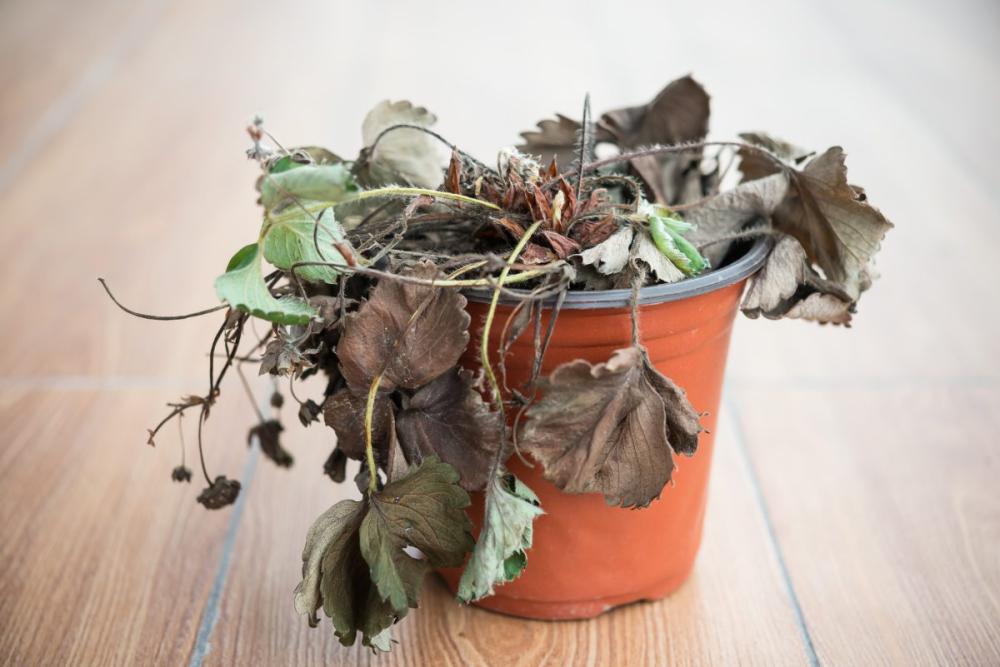

The first thing a farmer asks when a tomato or watermelon plant wilts on one side is: which pesticide cures it? The honest answer, which many articles leave out: Fusarium wilt has no cure once symptoms appear. The infected plant will not recover, so the real questions are how to save the rest of the field and how to plant next season in the same soil without losing again.
In this article we explain how to confirm the problem is Fusarium and not thirst, bacterial wilt or nematodes, why the soil stays contaminated for years, and what actually works: resistant varieties, grafting and soil management.
The disease: Fusarium wilt is a soil-dwelling fungus that blocks the plant's vessels, so the plant wilts and yellows, usually on one side.
Diagnosis: Cutting the stem lengthwise reveals brown discoloration in the vessels, which sets it apart from water shortage or bacterial wilt.
Survival: It survives in the soil for years as resistant spores, so pulling out the infected plant does not end it.
Common mistake: Planting the same crop in the same soil after an infection, so the disease returns the next season.
The rule: Soil disinfection, crop rotation, resistant varieties and good drainage are the practical solution, not a cure after wilting begins.
Fusarium Wilt: A Soil-Dwelling Enemy That Blocks the Vessels
The disease is caused by the fungus Fusarium oxysporum, which lives in the soil. It enters through small roots, especially through wounds, then climbs the xylem vessels that carry water up the plant and blocks them. That is why the plant wilts even though the soil is wet: the water is there, but the path is blocked.
This fungus is divided into specialized strains (called formae speciales), each of which infects one particular crop and almost no others:
- f. sp. lycopersici: on tomato, with three known races (1, 2 and 3).
- f. sp. niveum: on watermelon.
- f. sp. melonis and f. sp. cucumerinum: the first on melon, the second on cucumber.
- f. sp. cubense: on banana, the cause of the well-known Panama disease.
This specialization has a practical benefit: the Fusarium that killed tomatoes in your soil will usually not infect watermelon, and vice versa. So rotating with non-host crops reduces losses, although it does not clean the soil quickly.
How does it survive in the soil for years? The fungus forms thick-walled spores called chlamydospores, which tolerate drought, heat and the absence of a host, and remain in the soil and plant debris for many years. Agricultural extension sources indicate that the tomato wilt fungus can stay alive for about ten years without tomatoes being grown, and it can live on the roots of some weeds without showing disease on them.
It also spreads with anything that carries soil: seedlings from a contaminated nursery, reused seedling trays, workers' shoes, equipment wheels, flowing irrigation water, and sometimes seeds.
Symptoms: One-Sided Wilting Is a Strong Sign
Fusarium wilt develops relatively slowly and usually starts on one side of the plant. The real confirmation is inside the stem, not on the leaves, so combine what you see outside with the knife test.
How Symptoms Progress on the Plant
- Yellowing starts on the lower leaves, often on one side of the leaf or of the plant, so you find half a leaf yellow and the other half green.
- Midday wilting that improves in the evening and early morning at first, so the farmer thinks it is a thirst problem.
- Over time the wilting becomes permanent, the leaves dry from the bottom up while still hanging on the stem, and the plant dies, often at the start of fruit set and when temperatures rise.
The Knife Test: Inside the Stem and Roots
Cut the stem of the wilted plant near the soil surface, then split it lengthwise. In a healthy stem, the tissue under the bark is light green or white. With Fusarium wilt, you find brown or reddish-brown streaks in the vessels just under the bark, while the pith in the center stays healthy.
The higher up the stem the discoloration continues, the more severe the infection. The roots look relatively healthy at first, and brown discoloration may appear in their core when cut. This distinguishes it from root rots, where the roots themselves are soft and rotten.
Examples by Crop
- Tomato: Yellowing on one side of the lower leaves, gradual wilting, and vessel discoloration reaching high up the stem in severe infections.
- Watermelon and melon: One vine or the whole plant may suddenly wilt, small seedlings may die before they grow, and the disease usually appears in expanding patches in the same places in the field season after season.
- Cucumber: Plants wilt in greenhouses with discolored vessels, especially in soil that has grown cucumbers for consecutive seasons.
- Banana: Yellowing of the older leaves from the edges, then breaking at the petiole and hanging down around the pseudostem.
Another Wilt That Looks Similar: How to Tell the Difference
- Verticillium wilt: It also causes brown discoloration in the vessels and cannot be told apart by the knife alone. But it prefers cooler weather, and on tomato leaves yellow then dead V-shaped patches appear from the leaf edge. Final diagnosis needs a laboratory.
- Bacterial wilt: The plant wilts very quickly, within days, while still green. Place a piece of the infected stem in a glass of clear water: if a milky white thread flows out within minutes, it is bacterial wilt.
- Root and crown rots: The base is soft or cankered and the roots are brown and rotten, whereas in Fusarium the problem is inside the vessels.
- Root-knot nematodes: Pull up the plant and look at the roots: if you find galls and swellings, it is nematodes. The two often occur together, because nematode wounds open the way for the fungus and may weaken the resistance of resistant varieties.
- Thirst or soil salinity: Wilting affects whole areas of the field, improves with irrigation, and there is no discoloration in the vessels.
The Disease Cycle and Conditions That Increase It
Chlamydospores in the soil germinate when host roots come near. The fungus penetrates the tips of small roots or wounds, then enters the xylem vessels and moves upward, blocking them. Symptoms usually appear several weeks after infection.
When the plant dies, the fungus forms new spores in its tissues, which return to the soil with the residues, so its density in the soil increases season after season if the same crop is repeated. These are the most important conditions that increase the disease:
- High soil temperature: Fusarium is a disease of warm, humid weather, so losses peak in summer and at the start of fruit set.
- Acidic soil: Extension sources indicate that soil with a pH between 5 and 5.5 encourages the disease, and that raising it to 6.5-7 with lime reduces the fungus's survival. In soils that are already alkaline, this step is not needed.
- Type of nitrogen: Ammonium fertilizers increase the disease and nitrate fertilizers reduce its severity, and high nitrogen with low potassium increases susceptibility.
- Root wounds: From nematodes, rough transplanting or close hoeing.
- Light sandy soil and water stress: Both weaken the plant and make infection easier.
Solutions: What Actually Works?
Extension sources confirm that crop rotation and resistant varieties are far more effective than any pesticide, and that the available treatments work only preventively, before the fungus enters the roots. Do not believe any promise of a pesticide that brings a wilted plant back.
Biological control: Research and applications worldwide use beneficial organisms that compete with Fusarium around the roots, such as Trichoderma fungi, Streptomyces and Bacillus bacteria, and non-pathogenic Fusarium strains. They give the best result when applied with the seedling from the start and in soil that is not heavily contaminated.
Chemical control: Its role is limited and its timing is critical: protecting the roots at the sensitive transplanting stage only.
Treating nematodes is part of the treatment: If your soil is infested with nematodes, controlling Fusarium alone will not succeed; see our nematode article.
Orkida Products to Protect Roots From Fusarium
At Orkida we do not sell you a promise to cure a wilted plant. What we offer are products that protect the roots at the start: a biostimulant that strengthens the root environment, and two soil treatments at transplanting for soil with a history of wilt.
- BioHealth Myco WSG: From Humintech, it contains mycorrhizal fungi, beneficial bacteria, and humic and fulvic acids, and is used to soak seedling roots before planting or with irrigation. It is not a fungicide, but it supports stronger roots and a more active root environment, and the beneficial organisms in it colonize the root and compete with harmful soil fungi, helping protect against their diseases. Do not mix it with fungicides or add it directly after them.
- Uniform 446 SE: From Syngenta, it combines azoxystrobin (FRAC 11) and mefenoxam (FRAC 4), and is applied to the soil only at the roots of seedlings within three days of transplanting, or after emergence in direct seeding, and is not sprayed on leaves. It covers Fusarium among the soil fungi it targets, but its role is preventive, protecting the seedling at the start, not a cure for a wilted plant. It also protects against Pythium, Phytophthora and Rhizoctonia, which cause seedling death. Do not repeat its use in the same season, as both of its groups (4 and 11) carry a high resistance risk.
- Tachigaren 30% SL: From Japan's Mitsui Chemicals, hymexazol 30% (FRAC 32), it is applied as a drench around the roots, suppressing soil fungi including Fusarium in the root zone and helping new strong roots form. Its role, like all the soil treatments here, is to protect the seedling after transplanting in soil with a history of wilt, not to rescue a plant that is already wilting. Rate: as stated on the label, applied as a drench around the roots, with a 35-day pre-harvest interval. Its group differs from Uniform, so if you need a second soil treatment in the same season, let it be this one.
If you use Uniform or Tachigaren at transplanting, delay BioHealth Myco until the pesticide's effect has cleared from the root zone, and do not combine them in the same irrigation.
Prevention: The Real Solution Starts Before Planting
Since an infected plant cannot be treated, the real battle against Fusarium is decided before transplanting: a resistant variety, prepared soil, clean seedlings, and then strict hygiene throughout the season.
Before Planting
- Resistant varieties: The strongest and cheapest weapon. Look on the seed packet for the Fusarium resistance code (often written Fol or F with the race number). A variety resistant to race 1 may be infected by race 2 or 3.
- Grafting onto resistant rootstocks: A grafted seedling costs more, but it allows planting in contaminated soil with far fewer losses.
- Solarization: Covering moist soil with clear plastic during the hottest summer months for several weeks raises the temperature of the top layer enough to kill a large share of fungi, nematodes and weeds. Hot, sunny weather is a big advantage here.
- Crop rotation: With non-host crops for several seasons, bearing in mind that it reduces the disease but does not clean the soil completely.
- Seedlings from a trusted nursery: With new or sterilized trays.
During the Season
- Pull up infected plants with their roots: And remove them from the field; do not leave them to dry on the soil.
- Clean tools, shoes and equipment: Before moving from infected soil to healthy soil.
- Fertilize with nitrate instead of ammonium: With enough potassium.
Crop-Specific Tips
- Tomato: Choose a variety resistant to more than one race if available, or graft onto strongly resistant tomato rootstocks. If the disease appears on a resistant variety, check the roots for nematodes, or ask for the race to be identified in a laboratory.
- Watermelon, melon and cucumber: Grafting onto squash or pumpkin rootstocks is one of the most widespread and successful solutions, and do not repeat cucurbits in the same soil season after season.
- Banana: Use healthy, certified suckers or tissue-culture plantlets, because Panama disease spreads with propagation material and the soil clinging to it, and prevent the movement of soil and equipment from an infected farm.
Frequently Asked Questions About Fusarium Wilt
Can a tomato plant with Fusarium wilt be cured?
No. Once the fungus blocks the water-carrying vessels, there is no pesticide that reopens them. Remove the plant with its roots from the field, and focus on protecting the remaining plants and preparing the soil for the next season.
How many years does Fusarium stay in the soil?
Many years; extension sources estimate that the tomato wilt fungus survives about ten years without a host, thanks to its thick-walled spores. So along with rotation you need resistant varieties or grafting.
Does Fusarium spread from tomato to watermelon?
Usually not, because each strain is specialized in a particular crop. But that does not mean the soil is safe for watermelon if the watermelon strain is present from earlier seasons.
How do I know the wilt is Fusarium and not thirst?
Wilting on one side, improvement at night at first despite wet soil, then brown discoloration in the vessels when you split the stem lengthwise. Thirst leaves no discoloration and improves with irrigation.
Does fertilization help resist the wilt?
Balanced fertilization helps: nitrate nitrogen instead of ammonium, enough potassium, and avoiding excess nitrogen. But it is a supporting factor and does not replace a resistant variety.
For more on crop diseases and pests, visit the Pest Library.