
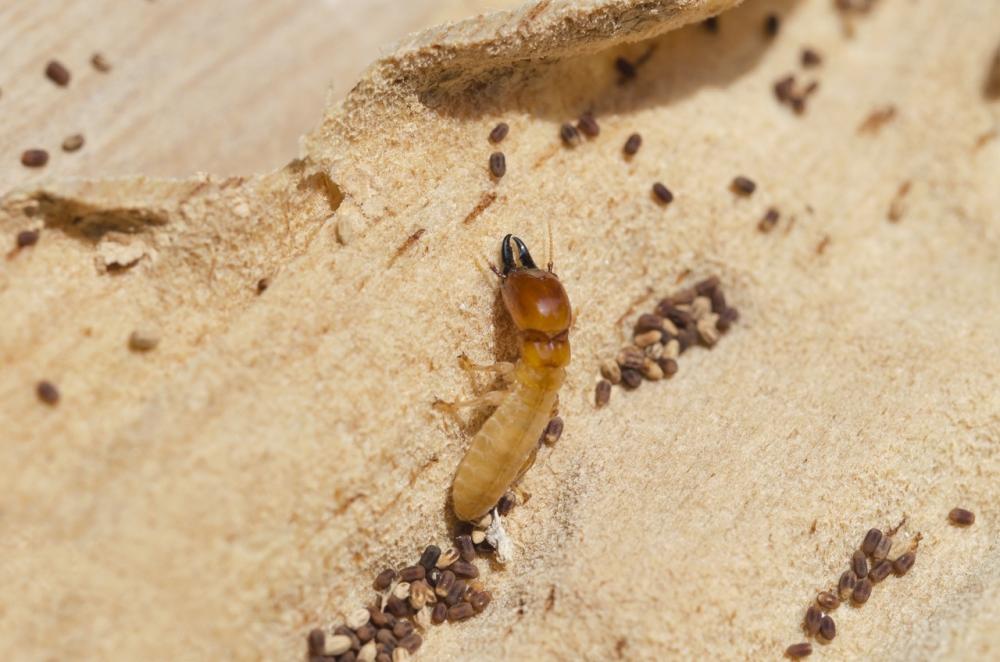

Termites are among the most dangerous pests affecting homes and buildings, because of their ability to cause serious damage to wood, furniture and wooden elements without homeowners noticing their presence in the early stages.
Termites often live inside the soil, walls or wood, which allows them to keep feeding and reproducing for long periods before any signs of infestation become clear. Detecting an infestation early therefore helps reduce losses and makes control easier before the colony spreads widely.
Scientific name: Termites (white ants), social insects of the order Blattodea.
Size and color: Small, pale or light brown insects. Winged termites have wings of equal length that drop off after mating.
Where they live: In soil, walls and wood, building mud tunnels on walls and floors.
How dangerous: They rarely bite, but they destroy wood from the inside and are hard to detect at the start.
Best time to act: At the first sign. Signs become clearer during periods of high humidity and after rain.
What are termites?
Termites are social insects that live in colonies that can include thousands or even millions of individuals. They feed mainly on cellulose, found in wood, paper, cardboard and some plant materials, and they are known for building mud tunnels that protect them as they move between the soil and food sources.
Why are termites dangerous?
The danger of termites is that they feed on wood from the inside out, so wood can look sound on the surface while being severely damaged inside. Over time the damage can spread to doors, windows, furniture, wooden ceilings and some structural parts of the building, leading to major financial losses and difficult repairs.
10 signs of termites
- 1. Mud tunnels on walls
- Termites build small mud tunnels or channels on walls and floors to protect themselves while moving between the soil and their food source.
- 2. Wood that is hollow inside
- Tapping on infested wood may produce a hollow sound because its inner parts have been eaten away.
- 3. Doors and windows that stick
- Termite activity and the moisture that comes with it can warp or swell wooden frames.
- 4. Discarded wings
- Winged termites usually shed their wings after mating, and the wings can often be seen near windows, doors and light sources.
- 5. Cracked or bubbling paint
- Bubbles or cracks may appear in paint because of tunnels or voids behind the paint layers.
- 6. Damaged wooden furniture
- Tiny holes or unusual weakness in parts of wooden furniture can be a sign of infestation.
- 7. Faint sounds inside the wood
- In some advanced infestations you may hear sounds made by colony members moving inside the wood.
- 8. Fine pellets that look like sawdust
- Some drywood termite species may leave tiny pellets near infested areas.
- 9. More activity after rain
- Moisture increases termite activity and makes the signs of infestation clearer.
- 10. Winged insects inside the home
- Seeing a number of insects with equal-length wings may indicate a colony nearby.
Where do termites usually hide?
Termites are not limited to visible wood. They may hide inside walls, under floors, around water pipes, behind wooden panels and in damp areas near the building's foundations. An infestation can therefore continue for a long time before any clear sign appears on the surface.
The most vulnerable places
- The bases of wooden doors and windows.
- Kitchens and bathrooms with high humidity.
- Storerooms and cardboard warehouses.
- Gardens and the areas around the building.
- Wooden ceilings and old furniture.
- Areas with water leaks.
When are termites most active?
Termite activity usually increases in the warm months, as temperatures rise and more winged insects emerge to start new colonies. It also increases after rainfall and during periods of high humidity, especially in buildings with water leaks or poor ventilation.
March to May is the most common period for seeing winged termites, while some regions may see extra activity in September and October depending on local climate. Even so, termites stay active all year inside the soil and wood, continuing to feed and reproduce without stopping, although the signs of infestation become clearer during periods of high humidity and after the rainy seasons.
How do you tell termites from flying ants?
In some seasons winged insects appear near lights and windows, and people often confuse them. To tell them apart, look at three features:
- Antennae: straight and bead-like in termites, bent (elbowed) in ants.
- Waist: broad and not obvious in termites, slim and clearly visible in ants.
- Wings: four wings of equal length in termites, while ants have a front pair longer than the back pair.
For more on the types, see the termite guide and the ground termite article.
What should you do when you notice the signs?
- Photograph the signs (mud tunnels, wings, hollow wood) and note where they are.
- Do not break the tunnels or remove the affected wood before an inspection, as this can make it harder to find the source of the infestation.
- Fix any leak or dampness near walls and foundations.
- Ask a licensed professional for an inspection before starting treatment, because the infestation may extend inside the walls and soil.
To learn about treatment and prevention steps, see the termite elimination article, the termite prevention article and the termite damage article, and browse the Pest Library for the rest of the guides.
Safety note: when using any pesticide, follow the product label and instructions for use, and keep children and pets away.
The best active ingredients used to control termites
Modern termite control relies on specialized insecticides that can reach the colony or form a protective barrier that stops its activity. Among the best-known active ingredients used worldwide for termite control:
- Fipronil.
- Imidacloprid.
- Bifenthrin.
- Chlorfenapyr.
These ingredients can control termites in the soil, around buildings and at infestation points, with differences in application method and length of protection depending on the ingredient used.
How is termite control carried out?
Termite control depends on reaching the colony and treating the source of the infestation, not just killing the visible insects. This is done by treating the soil around the building, injecting the infested areas, or creating protective barriers that stop the infestation from returning. A correct diagnosis is therefore the most important step to make the control work.
Termite control products available at Orkida
- Professional Termite Control Package: Orkida's complete package for treating an infestation inside the home.
- Premise 200 SC by Envu (formerly Bayer): a specialized termite insecticide, 1 liter bottle.
- Agenda 25 EC by Envu (formerly Bayer): a public health insecticide for termite control, 1 liter bottle.
- Biflex TC by FMC: a specialized termite insecticide, 1 liter bottle.
You will find all the options in the Termite Insecticides section. If the infestation is inside walls or foundations, it is best to have a specialist inspect it before treatment.
Frequently asked questions about termites
- Do termites bite humans?
- Termites are not considered dangerous to people and rarely cause any direct harm. Their real danger lies in their ability to damage wood, furniture and wooden elements in buildings.
- Can termites be eliminated with household spray?
- Household spray may kill only the visible insects. It usually does not reach the main colony inside the soil or walls, so the infestation may return after a short time.
- Do termites infest new homes?
- Yes, they can infest new and old homes alike, especially if the soil was not treated preventively during construction or if there are moisture sources near the building.
- What is the difference between termites and ordinary ants?
- Termites feed on wood and cellulose-containing materials, while ordinary ants look for typical foods such as sugars and proteins. Termites are also usually lighter in color than most ant species.
- Does the disappearance of mud tunnels mean the infestation is over?
- Not necessarily. The colony may continue to be active inside walls or under the soil without showing obvious signs on the surface.
- Do termites disappear on their own?
- No. Termite colonies do not usually disappear without treatment. They keep growing and expanding as long as moisture and suitable food sources are available.
- Can termites come back after control?
- Yes, the infestation can return if the colony was not fully treated or if conditions that favor termite activity persist, such as moisture, water leaks and food sources near the building.
Orkida advice
When you notice any sign of a termite infestation, do not just remove the damaged part or spray the visible insects, because the colony is usually hidden inside the soil or walls. The earlier the infestation is detected, the lower the cost of control and the better the chances of protecting the building and furniture, so regular inspection is recommended for homes, warehouses and buildings with wooden elements.
Frequently asked questions about signs of termites
What is the clearest sign of termites?
Thin mud tunnels on walls or foundations, discarded wings near windows, and wood that looks sound on the outside but sounds hollow when tapped.
Can I detect them myself?
You can notice the visible signs, but an internal infestation may stay hidden. A regular inspection by a specialist is recommended, especially in old houses or before buying a property.
When does an infestation become serious?
When damage appears in structural wood, doors or floors, or when winged termites keep appearing in the same season, delay increases the cost.
Do termites go away on their own?
No. The colony keeps feeding and expanding, and it only disappears with an effective treatment that reaches the colony.